[ngg src=”galleries” ids=”11″ display=”basic_imagebrowser”]Viewable as a pdf here: bit.ly/Fodienda
Comics
Bad Neighbors

A Little Girl Tugs on a Tablecloth
[ngg src=”galleries” ids=”9″ display=”basic_imagebrowser”]Illustrations for a poem by the wonderful Polish poet Wisława Szymborska, dedicated to my baby niece.
Fishes Wobble So They Don’t Sink Down

Do Betta

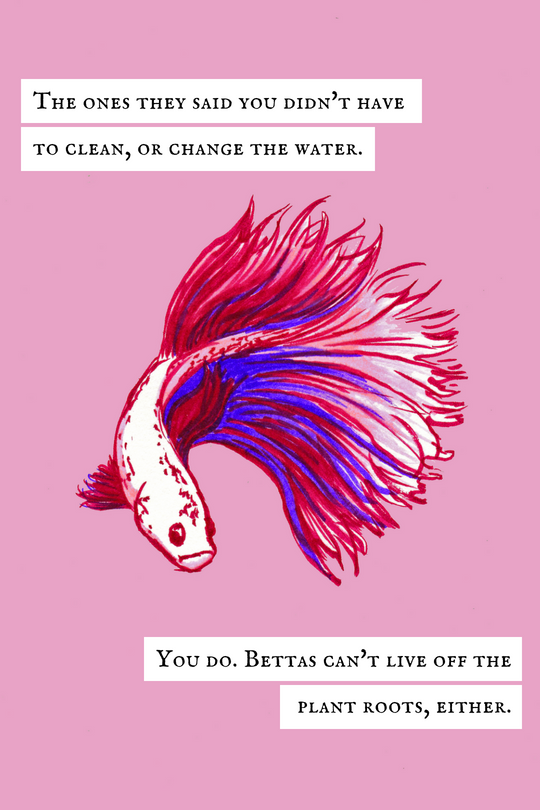


Bettas deserve better.
First the Dog

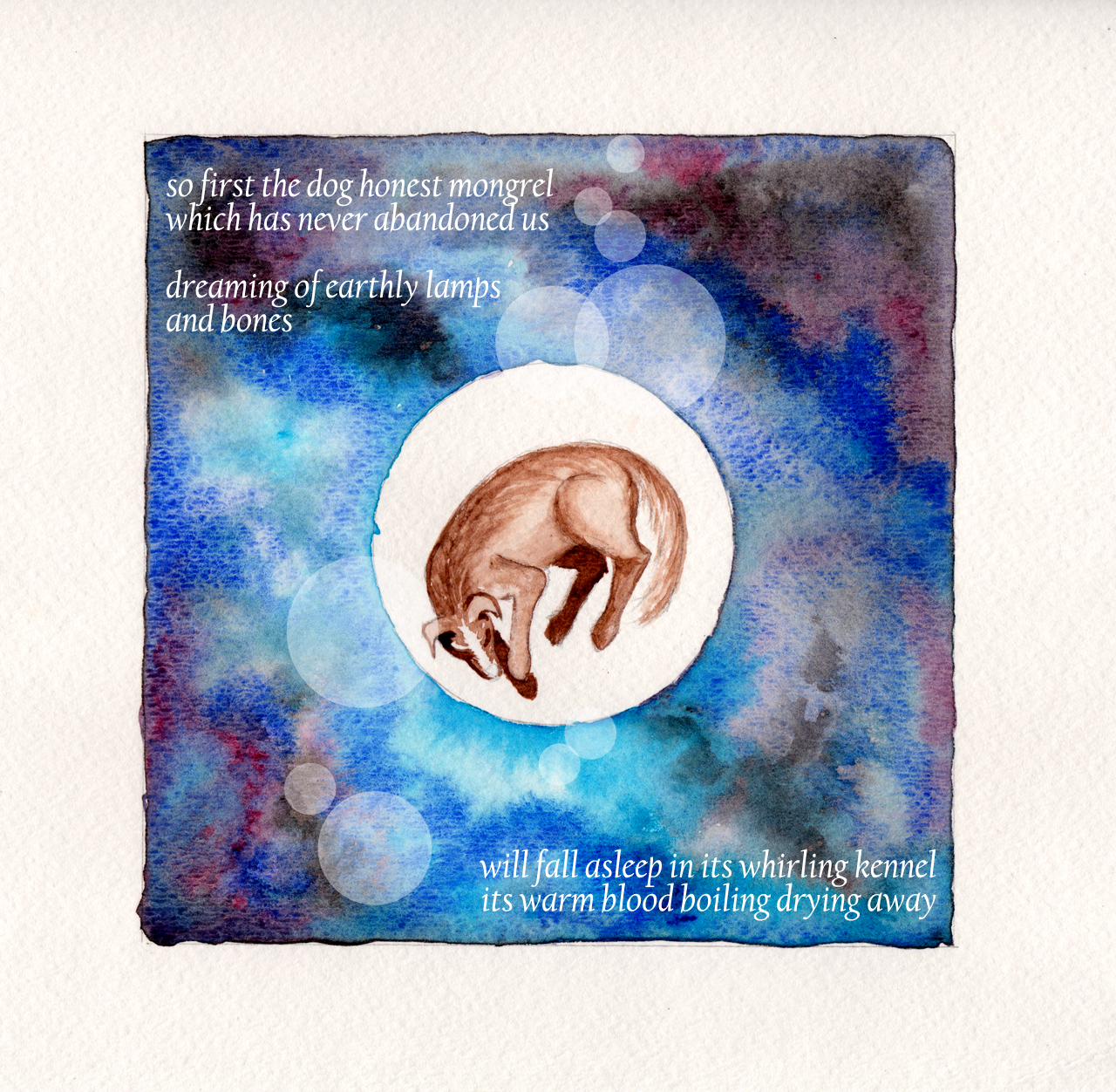
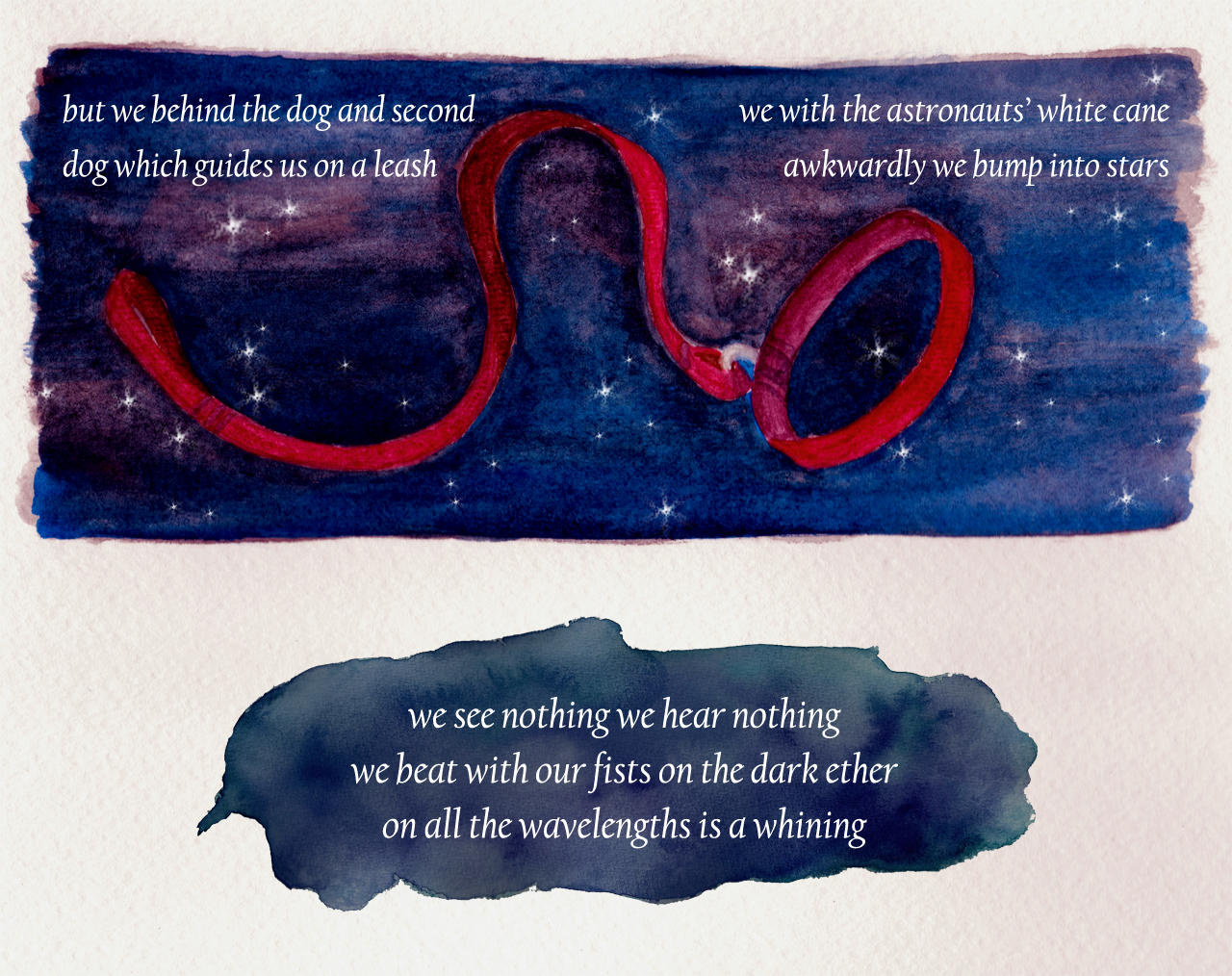

Speaking of the Polish poet Zbigniew Herbert, Robert Hass said that Herbert wrote “as if it were the task of the poet, in a world full of loud lies, to say what is irreducibly true in a level voice.”
Zbigniew Herbert (yes, that’s how it’s spelled, yes the names go in that order) came of age during the Nazi occupation of Poland, writing his first poems while a member of the Polish resistance. The introduction in my volume of his poems describes his work as “quarrying for himself a little area of light and sense in the engulfing darkness of total war and repression.” Even while ruminating on the fate of Laika, the Moscow stray sent to space in Sputnik 2, Herbert’s meticulous lines cast out a light into the unknown, into the blind darkness of space, tracing a path forward towards the future of space exploration.
From “Selected Poems,” translated by Czeslaw Milosz and Peter Dale Scott, 1968.
Unnatural
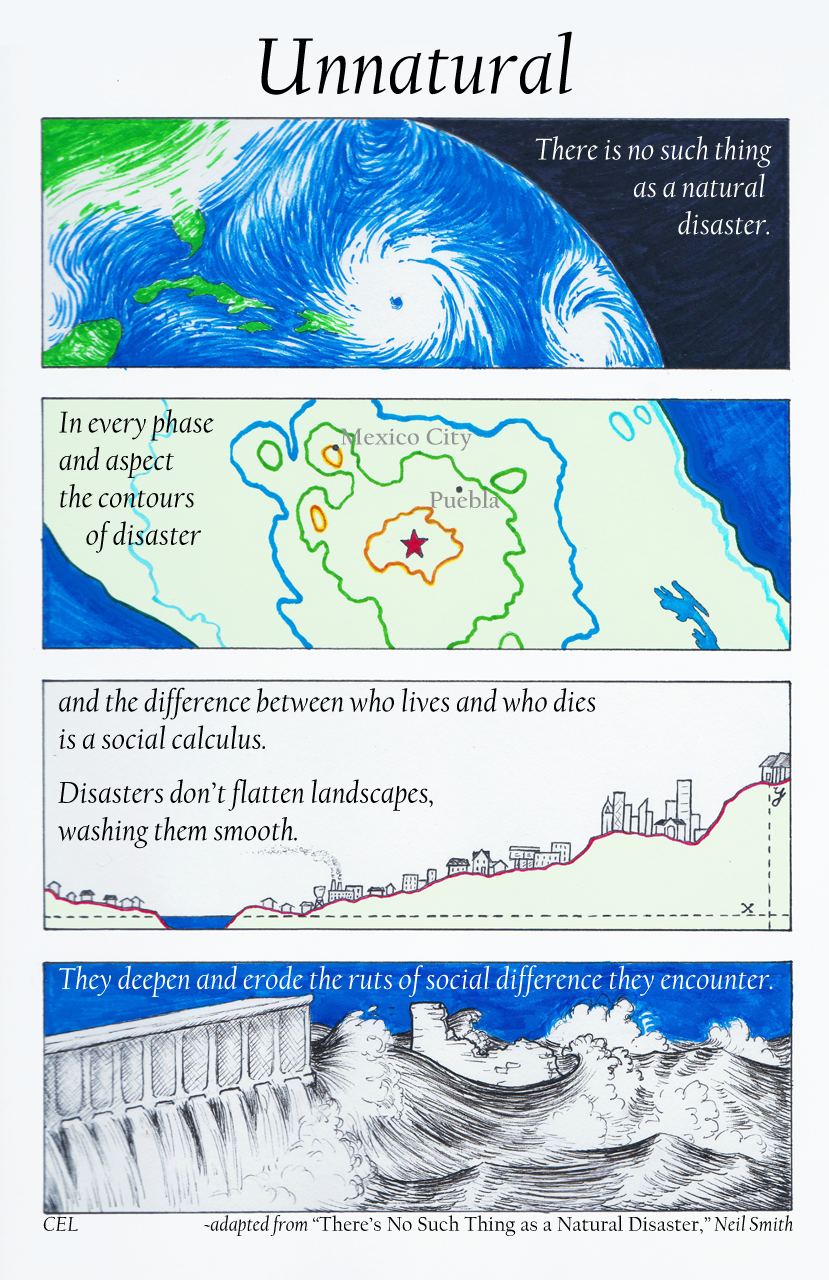
“It is generally accepted among environmental geographers that there is no such thing as a natural disaster. In every phase and aspect of a disaster – causes, vulnerability, preparedness, results and response, and reconstruction – the contours of disaster and the difference between who lives and who dies is to a greater or lesser extent a social calculus.”
This essay and others at Understanding Katrina were written in the aftermath of Hurricane Katrina, addressing the political and social issues laid bare by the devastation. They call the supposed “naturalness” of disasters a form of ideological camouflage for the fact that many dimensions of a disaster are preventable.
Even when the hazard itself is natural, like the earthquakes devastating Mexico, the effects are socially determined. Meanwhile, the battering ram of hurricanes in the last month was doubly so, exacerbated by the unnatural role of climate change that the government and special interests continue to let go unchecked. It’s easier – and more convenient – to dismiss disasters as an Act of God than to address them as failures of government, infrastructure, and preparedness.
Nettled

In Book I, Part V of Les Miserables, we are reintroduced to Valjean as Mssr. Madeleine, who, in between committing a series of agricultural good deeds, pauses to spend a near full page amiably lecturing the local farmers about the beneficial uses of nettles, with a less amiable aside on the failings of society. As a character moment, I’ve always been fond of this quote in its gentle ridiculousness, but it also quietly captures not only Valjean’s worldview but also the broad theme of the book, the vast potential that is snuffed out by the failures of an oppressive society that doesn’t just neglect the powerless and unfortunate, but actively rips them out by the roots.
Mushroomed

Succession

 quakeandquiver.com